


NEWS
1 August 2024
Wastewater purification: stages and treatment components (part 1)

Waste water, or waste water, is one of the by-products of domestic, industrial or agricultural activities, which often contains organic or inorganic substances that are harmful both to the environment and to the health of humans and animals. For this reason they must be collected and treated, to be safely reintroduced into the environment.
Pre-treatment phase
Before entering a purification system, wastewater may undergo a pre-treatment phase through a polyethylene grease trap or oil separator
Grease separators
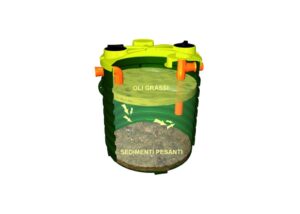
The grease traps treat oils and fats coming from domestic or industrial kitchens, separating them by gravitation: the wastewater enters a stationary sedimentation chamber, where they slow down the flow speed, so that the suspended solids settle to the bottom, while the oils and fats ( lighter than water) float at the top of the tank.
Oil Separators
Gravitational oil separators, on the other hand, are used in the treatment of water coming from squares and car parks (where they are often associated with a sand trap), and separate the oils and hydrocarbons usually present in these areas from the water. There are different types: corrugated, smooth and coalescing filter oil separators, each with specific characteristics to retain pollutants.
Waste water lifting stations
At the end of the pre-treatment phases, the waste water that is not discharged directly into the sewers or by underground dispersion may have to be raised to higher altitudes to reach subsequent refinement phases. The waste water lifting stations carry out this task, relaunching the clear, black or mixed water thanks to specific pumps, some equipped with a grinding impeller to reduce suspended solids, to collection basins positioned at different heights.
Primary treatment waste water
Septic tanks and imhoff tanks
The wastewater treatment and purification process begins with their collection in septic tanks or imhoff tanks. Both polyethylene systems are primary treatments for delivery into the sewer or underground dispersion for sub-irrigation, and provide for the separation of solid waste from liquid waste, with differences, however, in terms of use and effectiveness.
If both pits allow sedimentation of suspended solids, in the imhoff tanks the presence of two separate but communicating compartments (of sedimentation and anaerobic digestion of bacteria) allows for a greater reduction of the organic load(of BOD5 and COD over 30% , as well as 50% of suspended solids). However, the use of two-chamber or even better three-chamber septic tanks already allows a high level of purification to be achieved.
Wells (flushing, chlorinated, anti-reflux and dispensers)
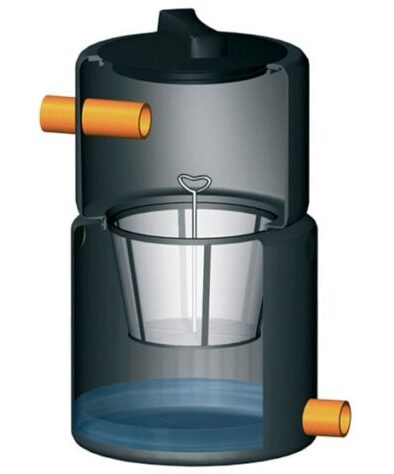
At the end of the primary wastewater treatment, a series of vertical wells of different types are provided:
- the waste sump allows for optimal distribution of the wastewater, avoiding obstructions in the pipes;
- the chlorinated well allows the wastewater to be disinfected through the use of chlorine tablets;
- the anti-backflow trap prevents the return of liquids and solids from the sewers, and prevents any flooding;
- the dosing well allows constant disinfection of the ducts using disinfectant agents.
The water thus treated can at this point be discharged into the sewers, or by underground dispersion. Alternatively, for recycling for irrigation use or direct discharge onto soil, the waste water must undergo further treatment phases (so-called secondary treatments), which increase the effectiveness of purification, and further reduce the level of contaminants.
For your complete treatment systems (such as first rain or car wash systems) contact Di Camillo: for over sixty years we have been supplying complete purification systems and components for each primary or secondary treatment phase, guaranteeing environmental protection, and full compliance with legal regulations.
Recent posts
- Car wash water treatment plants: treatment technologies, environmental regulations and water recycling
- Underground rainwater tanks: a technical guide to water harvesting and corporate water management
- Installing a flat-bottom “panettone” polyethylene tank: technical guidelines for foundations and fittings
- Imhoff tanks in concrete and polyethylene: technical analysis and selection criteria in specifications
- Above-ground or underground diesel tanks? The choice between steel and polyethylene
- Activated Sludge Systems: The Guide to Biological Efficiency and Regulatory Compliance
Contact us for info and prices
SEND A MESSAGE-ANSWER IN 2 HOURS
