


NEWS
19 January 2026
A Guide to Choosing Water Tanks: Beyond Storage, a Store of Value for Your Business
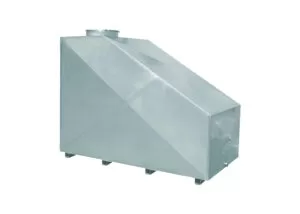
For a manufacturing company, water supply determines the continuity of the production line. The characteristics of the right tank vary from industry to industry, but they must all balance durability, hygiene, and space optimization to prove themselves a reliable asset.
1. Identifying the need: the operational starting point
Before evaluating a model, it is essential to map the actual use of the reserve. Each intended use brings with it a different technical challenge:
- Human consumption: requires absolute chemical inertia standards to maintain biologically pure water.
- Firefighting or irrigation: the focus shifts to structural resistance and mass containment capacity.
- Scalability: While 500-2,000 liters may suffice for an office, the industrial sector must focus on solutions of 10,000 to 20,000 liters to prevent downtime during periods of drought or peak loads.
2. Materials: Technical Excellence as a Problem-Solving Solution
In high-end industrial and civil engineering supplies, material selection cannot be reduced to a mere initial budget assessment. Rather, it is a strategic decision that directly impacts the system’s life cycle. A purchasing manager or designer knows that the material is the technological response to the chemical, physical, and biological stresses of the installation site. Failure to properly assess this means exposure to extraordinary maintenance costs, risks of system downtime, or, worse, regulatory non-compliance. At Di Camillo, we approach material selection with an engineering perspective, analyzing environmental issues to transform them into indestructible storage solutions.
Stainless Steel
The problem: In critical sectors such as food, pharmaceutical, or chemical, the challenge is not just containing a liquid, but preserving its molecular integrity. The porosity of some materials or their tendency to oxidize can become fertile ground for bacterial biofilms and cross-contamination. At the same time, installations in coastal areas or in industrial environments saturated with acidic vapors expose standard metals to accelerated and structural corrosion.
The solution: Using stainless steel (AISI 304 or 316L) represents the ultimate investment for those who cannot compromise on purity. Thanks to its self-passivation properties, stainless steel creates an invisible protective layer that makes it inert to its contents. Our consultancy often focuses on the 316L (molybdenum) version for marine applications: it is the only technical solution capable of resisting pitting caused by chlorides, ensuring that the tank remains a safe asset for decades, reducing the risk of leaks and external contamination to zero.
Polyethylene
The problem: Stored water is a living organism that reacts to external stimuli. Heat and, especially, solar radiation trigger photosynthesis, transforming a water reserve into an environment saturated with algae and microorganisms. Furthermore, in underground installations, the material must meet the challenge of “elastic memory”: it must withstand soil loads and variations in hydrostatic pressure without cracking.
The solution: Di Camillo’s high-density polyethylene (HDPE) tanks are the result of rotational molding technology that ensures the absence of joints, the weak point of every tank. We use polymers enhanced with superior UV stabilizers, which make the walls completely opaque to sunlight, eradicating the photosynthesis problem at its source. Their natural chemical inertness and exceptional mechanical resilience make them the most versatile choice for B2B: easy to install, immune to galvanic currents in the subsoil, and capable of keeping water fresh and biologically inert in any climate.
Galvanized Steel
The problem: When the project involves large-scale storage facilities or integration into complex pressure systems, mechanical stress becomes a critical factor. Pump vibrations, water hammer, and the need for absolute dimensional stability require a structure that will not deform under load, while also ensuring effective protection against the elements in construction site or heavy-duty industrial environments.
The solution: Hot-dip galvanized steel represents the synthesis of structural strength and economic pragmatism. Through the galvanizing process, the steel is metallurgically bonded to the zinc, creating cathodic protection that “sacrifices” itself to protect the heart of the tank. This is the solution we recommend for waterworks and industrial fire protection systems: it offers impact resistance and pressure load capacity that only metal can guarantee, providing a solid foundation on which to build the company’s production efficiency.
3. Space Optimization: Managing the Business Layout
Often, the main constraint in corporate and industrial solutions is available space. The configuration must therefore adapt to spatial requirements.
- Underground solutions: ideal for those who need to minimize visual impact or protect water from temperature fluctuations, and for those who need large tanks but lack the space to install them. Our models with reinforced ribs are designed to support the load of the ground without deformation.
- Space-saving configurations: rectangular prism, under-staircase, or custom models. They allow for space savings in narrow utility rooms, ensuring seamless integration into the existing layout.
Purchasing a Di Camillo tank means choosing a technical partner. We don’t just sell: we offer qualified technical assistance throughout Italy, rental services for temporary peaks, and the ability to create customized solutions based on your technical drawings.
Your water management deserves maximum reliability. Contact our experts today for a personalized consultation: protect your operations with the experience of those who have been building security for over sixty years.
Recent posts
- Installing a flat-bottom “panettone” polyethylene tank: technical guidelines for foundations and fittings
- Imhoff tanks in concrete and polyethylene: technical analysis and selection criteria in specifications
- Above-ground or underground diesel tanks? The choice between steel and polyethylene
- Activated Sludge Systems: The Guide to Biological Efficiency and Regulatory Compliance
- Rainwater treatment systems: a guide to choosing between storage and continuous flow systems
- Noisy Water Booster Systems: Warning Signs for Your System’s Efficiency
Contact us for info and prices
SEND A MESSAGE-ANSWER IN 2 HOURS
